http://genovators.com
Showing posts with label cars. Show all posts
Monday, 11 April 2016
Information Technology Career Diploma Description
http://genovators.com
Babbage All latest updates The future of computing
In a milestone for artificial intelligence, a program designed to play the ancient Asian game of Go has won the first of its five games against a human champion. It's an example of how smarter software, not just more powerful hardware, will drive progress in the computer industry in the future
Labels:
babbage,
best cars,
biometric,
camera,
cars,
coming,
computer,
design,
gaming,
genovators company,
genovators software,
genovators software houses,
interactive,
latest,
program,
seo,
softwares,
updates,
web design
Million-dollar babies
THAT a computer program can repeatedly beat the world champion at Go, a complex board game, is a coup for the fast-moving field of artificial intelligence (AI). Another high-stakes game, however, is taking place behind the scenes, as firms compete to hire the smartest AI experts. Technology giants, including Google, Facebook, Microsoft and Baidu, are racing to expand their AI activities. Last year they spent some $8.5 billion on deals, says Quid, a data firm. That was four times more than in 2010
http://www.genovators.com
Labels:
best cars,
biometric,
camera,
cars,
coming,
computer,
design,
gaming,
genovators,
genovators company,
kinect,
million,
new cars,
program,
sensors,
web,
web design,
webgrahpicsdesign
Saturday, 9 April 2016
Interactive computers
Computers will become more perceptual with a combination of gesture, voice and visual recognition technologies being installed in PCs. Starting next year, 2D cameras in PCs will be replaced by Intel's RealSense 3D cameras, which will be able to recognize objects and even measure distances between items. The camera's Kinect-like gesture recognition capabilities will also make PC gaming hands free and interactive. Intel has lofty goals, aiming to combine visual, voice and sound input to recognize human moods and reading habits. While those won't happen in the coming year, the 3D camera will certainly make Skype chats more fun.
http://genovators.com
Labels:
best cars,
biometric,
camera,
cars,
coming,
computer,
design,
gaming,
genovators,
genovators company,
genovators software houses,
goals,
hands,
interactive,
kinect,
new cars,
recognize,
sensors,
web,
webgrahpicsdesign
Saturday, 2 April 2016
Download Windows Media Player 12 for Windows 7, Vista & XP
Windows Media Player 12 is not officially available but you can download it as a beta version to get the preview of all its upcoming features. The Player 12 version would be offered as a combo in Windows 7 Operating System.You can also download the Windows Media Player 12 skins for Windows Vista & Windows XP if you want to get the same looks on your OS without installing the beta version.
This version of WMP is quite better than the version 11 because there are many changes made to the buttons and navigation. The player comes with two different player modes called as ‘Playing View’ & ‘Library View’. Library view contains all the library manipulation features that should be familiar from WMP11. Now Playing view contains the current playlist, visualizations, and videos. After making some searches i found that there was a download link available online, you can try it out and check out the players features.
http://www.genovators.com
Toshiba Chromebook 2
The perfect, compromise-free Chromebook has still proven to be somewhat illusive. Some have the power and battery life, but lack a good display or sleek design. However, the new entry from Toshiba comes just about as close as we’ve so far. This Chromebook has a nice 1080p display, a decent MacBook-esque design, and some impressive Chrome OS performance. The catch? You’ll have to pay an extra $80 for the full-HD IPS panel, which is unfortunate. Even still, both the $250 and $330 models are two of the best Chromebooks you can buy.
http://www.genovators.com/
Acer Aspire S7
Acer Aspire S7
http://www.genovators.com/
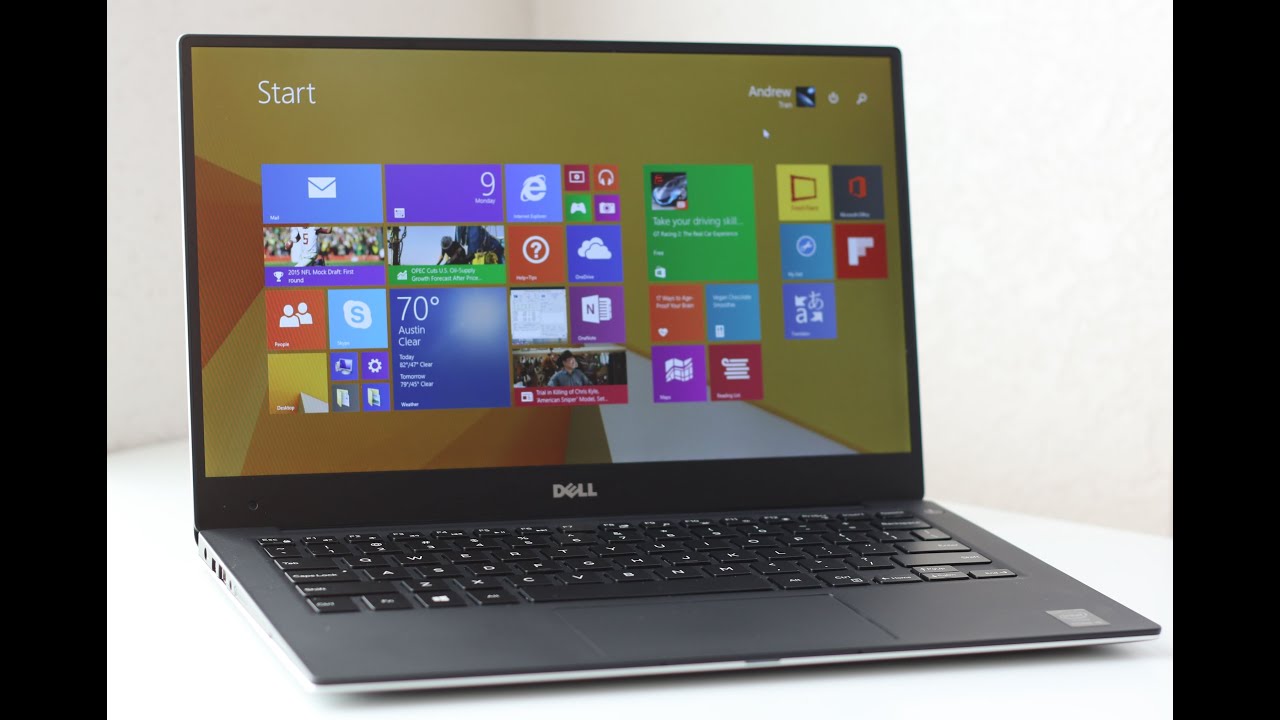
Dell XPS 13 Ultrabook Touch
There is still a market for rather boring-looking, but still valuable Windows ultrabooks. One of this year’s best is the Dell XPS 13 Ultrabook Touch. They’ve added on a touchscreen display and a new Haswell processor to the already very solid XPS 13 Ultrabook, making it the best 13-inch ultrabook next to the Acer Aspire S7. While the design can’t quite compete with the Aspire S7, the overall performance, touch screen, and impressive battery life make the XPS 13 Ultrabook Touch worthy of a spot on the list.

http://www.genovators.com/
Acer C720P Chromebook
The Acer C720 Chromebook has been a standby Chromebook since its launch back in 2013. It was one of the first Chromebooks to really prove that a computer this cheap could impress in both performance and battery life. Unfortunately, it was small, had a clunky design, and a rather cheap-looking display. This year’s C720P didn’t solve all of those problems, but it was a nice update nonetheless to an already great Chromebook. The new model got a fresh coat of white paint on it (which does more than you think) and a touchscreen, which will probably come in handy as Android apps begin to have a bigger presence in Chrome OS.
Car Technology 101
Car Technology 101
2014 BMW 328i xDrive Gran Turismo: Understanding BMW ConnectedDrive
When you order the optional Technology package with the 2014 BMW 3 Series Gran Turismo, you also get a host of smartphone app integration extras.
http://www.genovators.com/
2014 BMW 328i xDrive Gran Turismo: Understanding BMW ConnectedDrive
When you order the optional Technology package with the 2014 BMW 3 Series Gran Turismo, you also get a host of smartphone app integration extras.
http://www.genovators.com/
5 Cars That Communicate with Each Other and the Road
Car manufacturers and the U.S. government are seriously looking into and researching two technologies that would enable future cars to communicate with each other and with objects around them.
Imagine approaching an intersection as another car runs a red light. You don't see them at first, but your car gets a signal from the other car that it's directly in your path and warns you of the potential collision, or even hits the brakes automatically to avoid an accident. A developing technology called Vehicle-to-Vehicle communication, or V2V, is being tested by automotive manufacturers like Ford as a way to help reduce the amount of accidents on the road.
V2V works by using wireless signals to send information back and forth between cars about their location, speed and direction. The information is then communicated to the cars around it in order to provide information on how to keep the vehicles safe distances from each other. At MIT, engineers are working on V2V algorithms that calculate information from cars to determine what the best evasive measure should be if another car started coming into its own projected path. A study put out by the National Highway Traffic Safety Administration in 2010 says that V2V has the potential to reduce 79 percent of target vehicle crashes on the road [source: Green Car Congress].
But researchers aren't only considering V2V communication, vehicle-to-infrastructure communication, or V2I, is being tested as well. V2I would allow vehicles to communicate with things like road signs or traffic signals and provide information to the vehicle about safety issues. V2I could also request traffic information from a traffic management system and access the best possible routes. Reports by the NHTSA say that incorporating V2I into vehicles, along with V2V systems, would reduce all target vehicle crashes by 81 percent [source: Green Car Congress].
These technologies could transform the way we drive and increase automotive safety dramatically. Good thing car companies and the government are already working to try to make this a reality.
All of this communication and preemptive vehicle assistance leads us into our next future technology, so go on to the next page to find out what it is.
http://www.genovators.com/
Car manufacturers and the U.S. government are seriously looking into and researching two technologies that would enable future cars to communicate with each other and with objects around them.
Imagine approaching an intersection as another car runs a red light. You don't see them at first, but your car gets a signal from the other car that it's directly in your path and warns you of the potential collision, or even hits the brakes automatically to avoid an accident. A developing technology called Vehicle-to-Vehicle communication, or V2V, is being tested by automotive manufacturers like Ford as a way to help reduce the amount of accidents on the road.
V2V works by using wireless signals to send information back and forth between cars about their location, speed and direction. The information is then communicated to the cars around it in order to provide information on how to keep the vehicles safe distances from each other. At MIT, engineers are working on V2V algorithms that calculate information from cars to determine what the best evasive measure should be if another car started coming into its own projected path. A study put out by the National Highway Traffic Safety Administration in 2010 says that V2V has the potential to reduce 79 percent of target vehicle crashes on the road [source: Green Car Congress].
But researchers aren't only considering V2V communication, vehicle-to-infrastructure communication, or V2I, is being tested as well. V2I would allow vehicles to communicate with things like road signs or traffic signals and provide information to the vehicle about safety issues. V2I could also request traffic information from a traffic management system and access the best possible routes. Reports by the NHTSA say that incorporating V2I into vehicles, along with V2V systems, would reduce all target vehicle crashes by 81 percent [source: Green Car Congress].
These technologies could transform the way we drive and increase automotive safety dramatically. Good thing car companies and the government are already working to try to make this a reality.
All of this communication and preemptive vehicle assistance leads us into our next future technology, so go on to the next page to find out what it is.
http://www.genovators.com/
Subscribe to:
Posts (Atom)