http://genovators.com
Showing posts with label genovators seo. Show all posts
Monday, 11 April 2016
Information Technology Career Diploma Description
http://genovators.com
Paper Submission
The Journal welcomes the submission of manuscripts that meet the general criteria of significance and scientific excellence. For this purpose we would like to ask you to contribute your excellent papers in Computer Sciences,IT,Electronics and Elecrical fields. The International Journal of Advance Computer Technology encourages submission of innovative and which we will be enhance the original articles in all areas of Information Technology including Computer Science, Software Engineering, Information Systems, artificial intelligence, Computer Systems and Information Engineering and Electronics and Telecommunications.
http://genovators.com
Space station getting inflatable room, a cosmic 1st
CAPE CANAVERAL, Fla. — Forget blowup air mattresses. Space station astronauts are getting their first inflatable room.
It's a technology demo meant to pave the way for moon bases and Mars expeditions, as well as orbiting outposts catering to scientists and tourists in just a few more years. Bigelow Aerospace is behind the experiment, which will get a ride to the International Space Station with another private space company.
An unmanned SpaceX Falcon rocket is set to launch late Friday afternoon, carrying a capsule full of supplies with the pioneering pod in its trunk. It will be SpaceX's first station delivery since a launch accident halted shipments last June.
Once attached to the station, the soft-sided Bigelow compartment will be inflated to the size of a small bedroom. The Bigelow Expandable Activity Module, BEAM for short, will stay there for two years — with astronauts occasionally ducking in. It will be the first time an astronaut steps inside an expandable habitat structure in space.
"It's not just historic for our company, which obviously is the case, but I think it's historic for the architecture," said Robert Bigelow, founder and president of Bigelow Aerospace and owner of Budget Suites of America.
As a precursor to larger systems, Bigelow said BEAM could "change the entire dynamic for human habitation" in space. He hopes to have a pair of private space stations ready for launch by 2020.
In the meantime, companies— even countries — are clamoring to put their own experiments inside the empty BEAM, Bigelow said in an interview with The Associated Press on Thursday. If everything goes well, that next commercial step could happen in perhaps six months, he said.
The North Las Vegas-based company won't divulge the material used for BEAM's outer layers — or even how many layers — just that the layers are spread out to absorb and break up any penetrating bits of space junk. Back when NASA was working on the technology in the 1990s, a combination of Nextel, Kevlar, foam and other fabric formed the multilayer shield.
NASA called its project TransHab, for Transit Habitat. It never flew to space, despite elaborate blueprints and ground mock-ups. Designers envisioned an inflatable, four-level compartment, complete with dining, sleeping and exercising areas for station crews.
Congress canceled TransHab in 2000 and Bigelow Aerospace bought the patent from NASA. The company launched a pair of expandable spacecraft a decade ago from Russia as an experiment. Called Genesis I and II, they're still orbiting.
NASA, meanwhile, paid Bigelow Aerospace $17.8 million for the upcoming test flight, making the BEAM the most affordable module ever launched to the space station, said Michael Gold, director of operations and business growth for Bigelow Aerospace.
Expandable habitats like BEAM, officials noted, need to be just as strong — or stronger — than the standard metal cylinders that make up the current space station. BEAM has proven to be equal or better against space debris than metal, said NASA project manager Rajib Dasgupta.
Bigelow goes as far as to say: "The aluminum cans are antiquated."
Beyond low-Earth orbit, radiation poses increased health risks to crews living inside aluminum walls. So inflatable spacecraft, he said, are cheaper, bigger, safer and, potentially, longer lasting.
Bigelow said BEAM is nothing like a balloon — "it's not going to go bang" — or even a football. Think steel belts in a car tire. "It's pretty novel."
It's a technology demo meant to pave the way for moon bases and Mars expeditions, as well as orbiting outposts catering to scientists and tourists in just a few more years. Bigelow Aerospace is behind the experiment, which will get a ride to the International Space Station with another private space company.
An unmanned SpaceX Falcon rocket is set to launch late Friday afternoon, carrying a capsule full of supplies with the pioneering pod in its trunk. It will be SpaceX's first station delivery since a launch accident halted shipments last June.
Once attached to the station, the soft-sided Bigelow compartment will be inflated to the size of a small bedroom. The Bigelow Expandable Activity Module, BEAM for short, will stay there for two years — with astronauts occasionally ducking in. It will be the first time an astronaut steps inside an expandable habitat structure in space.
"It's not just historic for our company, which obviously is the case, but I think it's historic for the architecture," said Robert Bigelow, founder and president of Bigelow Aerospace and owner of Budget Suites of America.
As a precursor to larger systems, Bigelow said BEAM could "change the entire dynamic for human habitation" in space. He hopes to have a pair of private space stations ready for launch by 2020.
In the meantime, companies— even countries — are clamoring to put their own experiments inside the empty BEAM, Bigelow said in an interview with The Associated Press on Thursday. If everything goes well, that next commercial step could happen in perhaps six months, he said.
The North Las Vegas-based company won't divulge the material used for BEAM's outer layers — or even how many layers — just that the layers are spread out to absorb and break up any penetrating bits of space junk. Back when NASA was working on the technology in the 1990s, a combination of Nextel, Kevlar, foam and other fabric formed the multilayer shield.
NASA called its project TransHab, for Transit Habitat. It never flew to space, despite elaborate blueprints and ground mock-ups. Designers envisioned an inflatable, four-level compartment, complete with dining, sleeping and exercising areas for station crews.
Congress canceled TransHab in 2000 and Bigelow Aerospace bought the patent from NASA. The company launched a pair of expandable spacecraft a decade ago from Russia as an experiment. Called Genesis I and II, they're still orbiting.
NASA, meanwhile, paid Bigelow Aerospace $17.8 million for the upcoming test flight, making the BEAM the most affordable module ever launched to the space station, said Michael Gold, director of operations and business growth for Bigelow Aerospace.
Expandable habitats like BEAM, officials noted, need to be just as strong — or stronger — than the standard metal cylinders that make up the current space station. BEAM has proven to be equal or better against space debris than metal, said NASA project manager Rajib Dasgupta.
Bigelow goes as far as to say: "The aluminum cans are antiquated."
Beyond low-Earth orbit, radiation poses increased health risks to crews living inside aluminum walls. So inflatable spacecraft, he said, are cheaper, bigger, safer and, potentially, longer lasting.
Bigelow said BEAM is nothing like a balloon — "it's not going to go bang" — or even a football. Think steel belts in a car tire. "It's pretty novel."
Popular Firefox Add-Ons Vulnerable to Cross-Extension Exploit
Here's the bad news: There's a new kind of browser attack that can take advantage of the normally helpful things that some of your extensions can do. It's actually a rather ingenious attack. Rather than trying to infiltrate your browser and having it do something it shouldn't, a malicious extension attempts to get your other extensions—which aren't isolated from one another—to do things on its behalf.
The end result? It's trickier to find the original attacker, since it's basically hiding in plain sight. And this isn't just an issue that affects lesser-known extensions. As researchers from Boston's Northeastern University found, nine of the ten most popular Firefox extensions could be exploited by another extension—one that appears to be totally benign and normal on its face, but is piggybacking off of other extensions to steal a user's personal data or redirect them to malware-filled websites
"These vulnerabilities allow a seemingly innocuous extension to reuse security-critical functionality provided by other legitimate, benign extensions to stealthily launch confused deputy-style attacks. Malicious extensions that utilize this technique would be significantly more difficult to detect by current static or dynamic analysis techniques, or extension vetting procedures," reads a paper from said researchers, presented at Singapore's recent Black Hat Asia security conference.
Just to show how easy it is for an attacker to exploit these vulnerabilities, The Register reports that the researchers were able to upload a blatantly malicious—but harmless—extension to Firefox's big gallery. The extension, dubbed "ValidateThisWebsite," didn't conceal its ambitions in its code whatsoever. And, yet, the extension still managed to make it through Mozilla's security checks, even a more extensive "fully reviewed" analysis, without issue. (That's likely because it's not making any malicious calls to Firefox itself; it's making other extensions do it once it's installed in a user's browser.)
Said researchers provided Firefox with an explanation of the process as well as a new Crossfire application that can assist with finding these sneaky extensions. Firefox vice president of product, Nick Nguyen, also issued a statement that indicates Mozilla is actively working to secure up extensions and eliminate these cross-extension vulnerabilities.
"The way add-ons are implemented in Firefox today allows for the scenario hypothesized and presented at Black Hat Asia. The method described relies on a popular add-on that is vulnerable to be installed, and then for the add-on that takes advantage of that vulnerability to also be installed," it reads.
"Because risks such as this one exist, we are evolving both our core product and our extensions platform to build in greater security. The new set of browser extension APIs that make up WebExtensions, which are available in Firefox today, are inherently more secure than traditional add-ons, and are not vulnerable to the particular attack outlined in the presentation at Black Hat Asia. As part of our electrolysis initiative—our project to introduce multi-process architecture to Firefox later this year—we will start to sandbox Firefox extensions so that they cannot share code."
Labels:
addons,
attacks,
badnews,
browser,
cross,
exploit,
extensions,
firefox,
genovators seo,
genovators software,
malicious,
mozzila,
northeasternuniversity,
popular,
seo,
softwares,
utilize,
vulnerable,
web design
Saturday, 2 April 2016
HP Stream 13
HP Stream 13
The HP Stream is far from a perfect laptop, but it gives some promising hints that Microsoft is willing to work with OEMs to give Chromebooks a true run for their money. While the HP Stream can’t always compete with refreshing minimalism of Chrome OS, the $199 HP Stream 13 has a full 1080p HD display, a nice simple design, some decent battery life, and runs full Windows 8.1. There are plenty of reasons to choose this affordable Windows laptop over a Chromebook and it just might be the best budget laptop to ever run Windows.
http://genovators.com/
Download Windows Media Player 12 for Windows 7, Vista & XP
Windows Media Player 12 is not officially available but you can download it as a beta version to get the preview of all its upcoming features. The Player 12 version would be offered as a combo in Windows 7 Operating System.You can also download the Windows Media Player 12 skins for Windows Vista & Windows XP if you want to get the same looks on your OS without installing the beta version.
This version of WMP is quite better than the version 11 because there are many changes made to the buttons and navigation. The player comes with two different player modes called as ‘Playing View’ & ‘Library View’. Library view contains all the library manipulation features that should be familiar from WMP11. Now Playing view contains the current playlist, visualizations, and videos. After making some searches i found that there was a download link available online, you can try it out and check out the players features.
http://www.genovators.com
Toshiba Chromebook 2
The perfect, compromise-free Chromebook has still proven to be somewhat illusive. Some have the power and battery life, but lack a good display or sleek design. However, the new entry from Toshiba comes just about as close as we’ve so far. This Chromebook has a nice 1080p display, a decent MacBook-esque design, and some impressive Chrome OS performance. The catch? You’ll have to pay an extra $80 for the full-HD IPS panel, which is unfortunate. Even still, both the $250 and $330 models are two of the best Chromebooks you can buy.
http://www.genovators.com/
Acer Aspire S7
Acer Aspire S7
http://www.genovators.com/
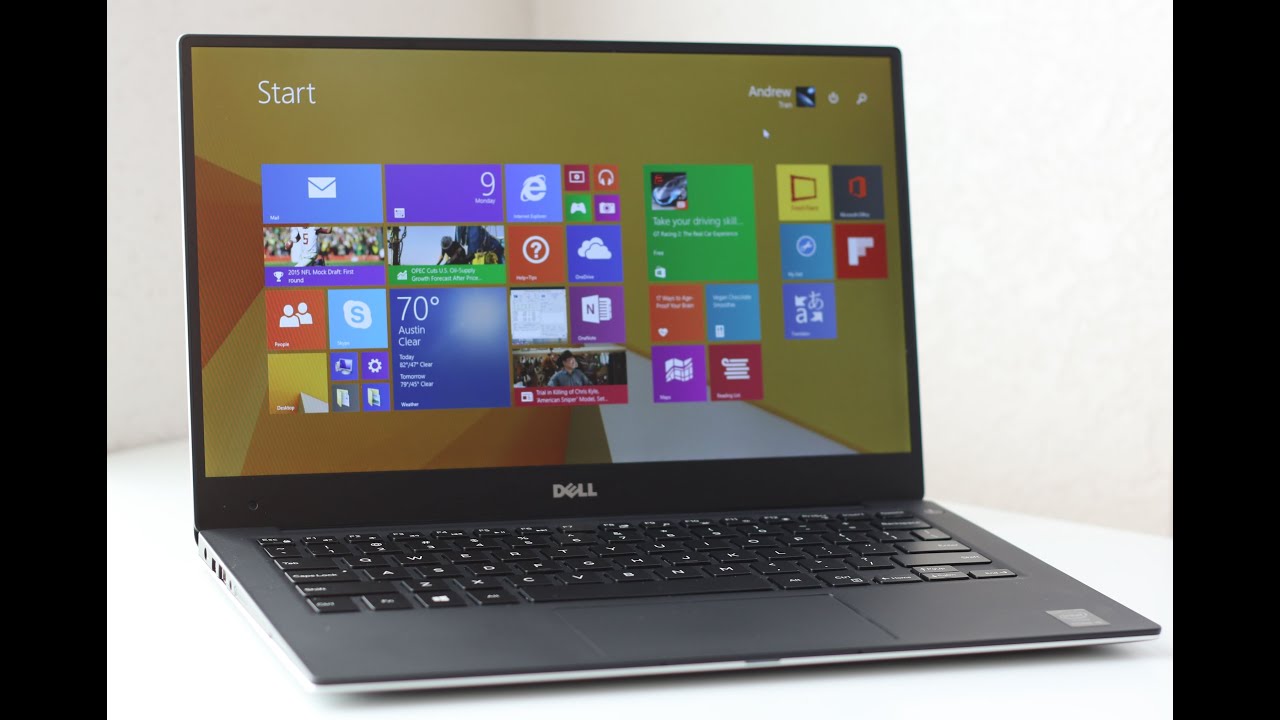
Dell XPS 13 Ultrabook Touch
There is still a market for rather boring-looking, but still valuable Windows ultrabooks. One of this year’s best is the Dell XPS 13 Ultrabook Touch. They’ve added on a touchscreen display and a new Haswell processor to the already very solid XPS 13 Ultrabook, making it the best 13-inch ultrabook next to the Acer Aspire S7. While the design can’t quite compete with the Aspire S7, the overall performance, touch screen, and impressive battery life make the XPS 13 Ultrabook Touch worthy of a spot on the list.

http://www.genovators.com/
Acer C720P Chromebook
The Acer C720 Chromebook has been a standby Chromebook since its launch back in 2013. It was one of the first Chromebooks to really prove that a computer this cheap could impress in both performance and battery life. Unfortunately, it was small, had a clunky design, and a rather cheap-looking display. This year’s C720P didn’t solve all of those problems, but it was a nice update nonetheless to an already great Chromebook. The new model got a fresh coat of white paint on it (which does more than you think) and a touchscreen, which will probably come in handy as Android apps begin to have a bigger presence in Chrome OS.
Car Technology 101
Car Technology 101
2014 BMW 328i xDrive Gran Turismo: Understanding BMW ConnectedDrive
When you order the optional Technology package with the 2014 BMW 3 Series Gran Turismo, you also get a host of smartphone app integration extras.
http://www.genovators.com/
2014 BMW 328i xDrive Gran Turismo: Understanding BMW ConnectedDrive
When you order the optional Technology package with the 2014 BMW 3 Series Gran Turismo, you also get a host of smartphone app integration extras.
http://www.genovators.com/
5 Cars That Communicate with Each Other and the Road
Car manufacturers and the U.S. government are seriously looking into and researching two technologies that would enable future cars to communicate with each other and with objects around them.
Imagine approaching an intersection as another car runs a red light. You don't see them at first, but your car gets a signal from the other car that it's directly in your path and warns you of the potential collision, or even hits the brakes automatically to avoid an accident. A developing technology called Vehicle-to-Vehicle communication, or V2V, is being tested by automotive manufacturers like Ford as a way to help reduce the amount of accidents on the road.
V2V works by using wireless signals to send information back and forth between cars about their location, speed and direction. The information is then communicated to the cars around it in order to provide information on how to keep the vehicles safe distances from each other. At MIT, engineers are working on V2V algorithms that calculate information from cars to determine what the best evasive measure should be if another car started coming into its own projected path. A study put out by the National Highway Traffic Safety Administration in 2010 says that V2V has the potential to reduce 79 percent of target vehicle crashes on the road [source: Green Car Congress].
But researchers aren't only considering V2V communication, vehicle-to-infrastructure communication, or V2I, is being tested as well. V2I would allow vehicles to communicate with things like road signs or traffic signals and provide information to the vehicle about safety issues. V2I could also request traffic information from a traffic management system and access the best possible routes. Reports by the NHTSA say that incorporating V2I into vehicles, along with V2V systems, would reduce all target vehicle crashes by 81 percent [source: Green Car Congress].
These technologies could transform the way we drive and increase automotive safety dramatically. Good thing car companies and the government are already working to try to make this a reality.
All of this communication and preemptive vehicle assistance leads us into our next future technology, so go on to the next page to find out what it is.
http://www.genovators.com/
Car manufacturers and the U.S. government are seriously looking into and researching two technologies that would enable future cars to communicate with each other and with objects around them.
Imagine approaching an intersection as another car runs a red light. You don't see them at first, but your car gets a signal from the other car that it's directly in your path and warns you of the potential collision, or even hits the brakes automatically to avoid an accident. A developing technology called Vehicle-to-Vehicle communication, or V2V, is being tested by automotive manufacturers like Ford as a way to help reduce the amount of accidents on the road.
V2V works by using wireless signals to send information back and forth between cars about their location, speed and direction. The information is then communicated to the cars around it in order to provide information on how to keep the vehicles safe distances from each other. At MIT, engineers are working on V2V algorithms that calculate information from cars to determine what the best evasive measure should be if another car started coming into its own projected path. A study put out by the National Highway Traffic Safety Administration in 2010 says that V2V has the potential to reduce 79 percent of target vehicle crashes on the road [source: Green Car Congress].
But researchers aren't only considering V2V communication, vehicle-to-infrastructure communication, or V2I, is being tested as well. V2I would allow vehicles to communicate with things like road signs or traffic signals and provide information to the vehicle about safety issues. V2I could also request traffic information from a traffic management system and access the best possible routes. Reports by the NHTSA say that incorporating V2I into vehicles, along with V2V systems, would reduce all target vehicle crashes by 81 percent [source: Green Car Congress].
These technologies could transform the way we drive and increase automotive safety dramatically. Good thing car companies and the government are already working to try to make this a reality.
All of this communication and preemptive vehicle assistance leads us into our next future technology, so go on to the next page to find out what it is.
http://www.genovators.com/
5 Future Car Technologies That Truly Have a Chance
In the technology world, the latest advancement is only as good as the next thing coming down the line. The auto industry is constantly bringing us new technologies, whether it be for safety, entertainment, usefulness or simply for pure innovation.
Many new car technologies are either specifically built for safety or at least have some sort of safety focus to them. Some of the latest car innovations we've found are some truly exciting technologies that could revolutionize not just the automotive industry but human transportation in general.
So what's in store for future cars? Well, we don't know for sure, but based on what's currently being tested and what's on the road today, we have an idea of some new technology that will most likely make it into production. Some of it will help keep us safe, some will give us information like never before and some will let us kick back and just enjoy the ride.
In the technology world, the latest advancement is only as good as the next thing coming down the line. The auto industry is constantly bringing us new technologies, whether it be for safety, entertainment, usefulness or simply for pure innovation.
Many new car technologies are either specifically built for safety or at least have some sort of safety focus to them. Some of the latest car innovations we've found are some truly exciting technologies that could revolutionize not just the automotive industry but human transportation in general.
So what's in store for future cars? Well, we don't know for sure, but based on what's currently being tested and what's on the road today, we have an idea of some new technology that will most likely make it into production. Some of it will help keep us safe, some will give us information like never before and some will let us kick back and just enjoy the ride.
Thursday, 31 March 2016
Customer Service
Customer Service
And Affinity
Customer service executives use their skills and experience to ensure that a company delivers the highest standards of service to customers. Depending on the size of the business, the executive may deal directly with customers’ inquiries and complaints, or manage a team of customer service representatives. Either way, the customer service executive aims to maximize customer satisfaction.Faster than Light
Web site optimization produces highly competitive web sites that out-perform on every measure; traffic, speed, conversion rates, sell-throughs, and, most importantly, return on your investment. We offer expert website optimization services and a book Website Optimization: Speed, Search Engine.
Crazy Coding
Crazy Coding
Hand Developing
Our custom web development services are a sophisticated blend of intelligent programming, creative design & forward thinking business acumen. By leveraging our broad technological experience & highly creative design skills, we deliver creative flavors to satisfy even the most discriminating customer requirements.Graphic Design
Graphic Design
we create creativity
We provide complete web design services to make your product to be successful in market with eye-catching outlook and appropriate web design.
Saturday, 26 March 2016
Genovators Software Company
Friday, 25 March 2016
Subscribe to:
Posts (Atom)